
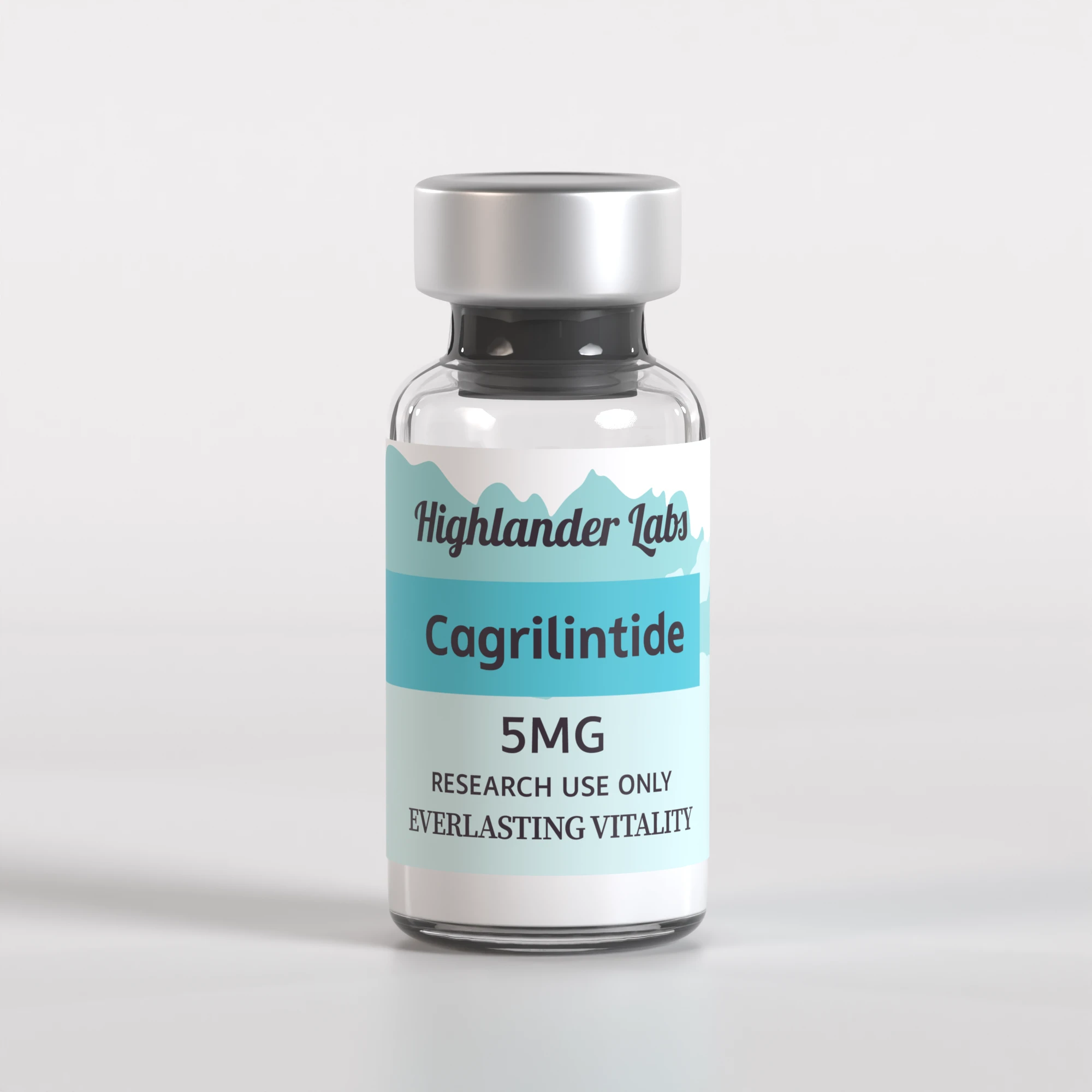

Cagrilintide 5MG
Cagrilintide is a synthetic peptide being investigated in preclinical and early-phase research for potential applications in metabolic and gastrointestinal studies. This product is provided as a research-use-only reagent for scientific investigation under approved institutional protocols. The following information provides contextual details regarding its current research status and application.
Research Context
Cagrilintide is structurally derived from glucagon-like peptide-1 (GLP-1) agonists, a class of compounds that modulate gastrointestinal motility and pancreatic hormone secretion. While it has not yet been clinically validated for therapeutic purposes, it has shown promise in experimental models for exploring the pharmacology of gut-brain communication and metabolic regulation. Researchers may utilize this peptide to study its effects on gut hormone release, appetite regulation, and potential gastrointestinal side effects in preclinical settings.
Research Overview
Cagrilintide is under investigation as a tool to investigate the effects of GLP-1 receptor agonism on appetite suppression, gastrointestinal transit, and metabolic responses. Early studies in animal models have demonstrated potential for modulating satiety and glucose metabolism, though full mechanistic understanding remains in development. This peptide may be used in conjunction with other research reagents to assess its interaction with native GLP-1 signaling pathways.
Key Research Focus Areas
- GLP-1 receptor-mediated gastrointestinal physiology
- Appetite regulation and satiety mechanisms
- Gut-brain axis interactions in metabolic health
- Preclinical toxicology and pharmacokinetics
- Comparative efficacy vs. native GLP-1 analogs
Product Notes
The 5MG vial contains lyophilized Cagrilintide in sterile, protein-free buffer. Researchers are advised to verify batch-specific potency and purity before use in accordance with institutional guidelines. Storage should be maintained at ≤ -20°C until reconstitution, with the diluted solution stored at 4°C for no longer than 48 hours.
For research use only. Not for human or animal consumption.
| Size | 5MG |
|---|
Reviews
There are no reviews yet.